
Elbert County Court Records After Arrest
The path is arrest, booking, first appearance or bond review, prosecutorial charging, and then a court case. The Elbert County Jail handles the custody side for arrests made by the sheriff, Elizabeth Police, Simla Police, Colorado State Patrol, and other agencies that bring people to the county facility. Sheriff Tim Norton's office runs the jail records side of that first step. After booking, custody and release questions still begin with the jail, but the formal court records after a jail arrest move into the Colorado Judicial Branch system. That is where the case number, hearing dates, court type, filed charges, and later dispositions are tracked.
Elbert County is in Colorado's 23rd Judicial District. The 23rd Judicial District Attorney serves Douglas, Elbert, and Lincoln counties, and the current District Attorney is George H. Brauchler, sworn on January 14, 2025. The 23rd Judicial District was established in 2025, so older references may point to prior district structures. For a fresh arrest, do not treat jail booking language as the final charge list. The District Attorney decides whether to file, amend, reduce, dismiss, or pursue charges in court.
Jail custody records and court records serve different jobs. The jail inmate records page covers the phone roster, booking status, and current custody route. The jail mugshots page covers booking photos and sheriff records requests. Court records after a jail arrest focus on the filed case: the charging document, docket settings, bond orders, charge status, plea or trial events, and final disposition.
Find Court Records After Arrest
The official starting point for hearing and docket information is the Colorado Judicial Branch docket search. For Elbert County court records after a jail arrest, choose the 23rd Judicial District, Elbert County, or the Elbert County Courthouse when those fields fit the search. The docket page requires a date range plus at least one more filter. A party name can help when no case number is known, while a case number is more precise if it appears on bond paperwork, a court notice, or attorney paperwork.
The docket search is not a full document database. It can help locate hearings and case identifiers, but official copies of complaints, informations, orders, and dispositions come through the court record process. The Colorado Judicial Branch public records guide explains that limited online access may exist through commercial vendors, but those sources are not the official court record and do not provide document copies.
The Colorado Judicial Branch docket page shows the search form used for Elbert County court records after an arrest.
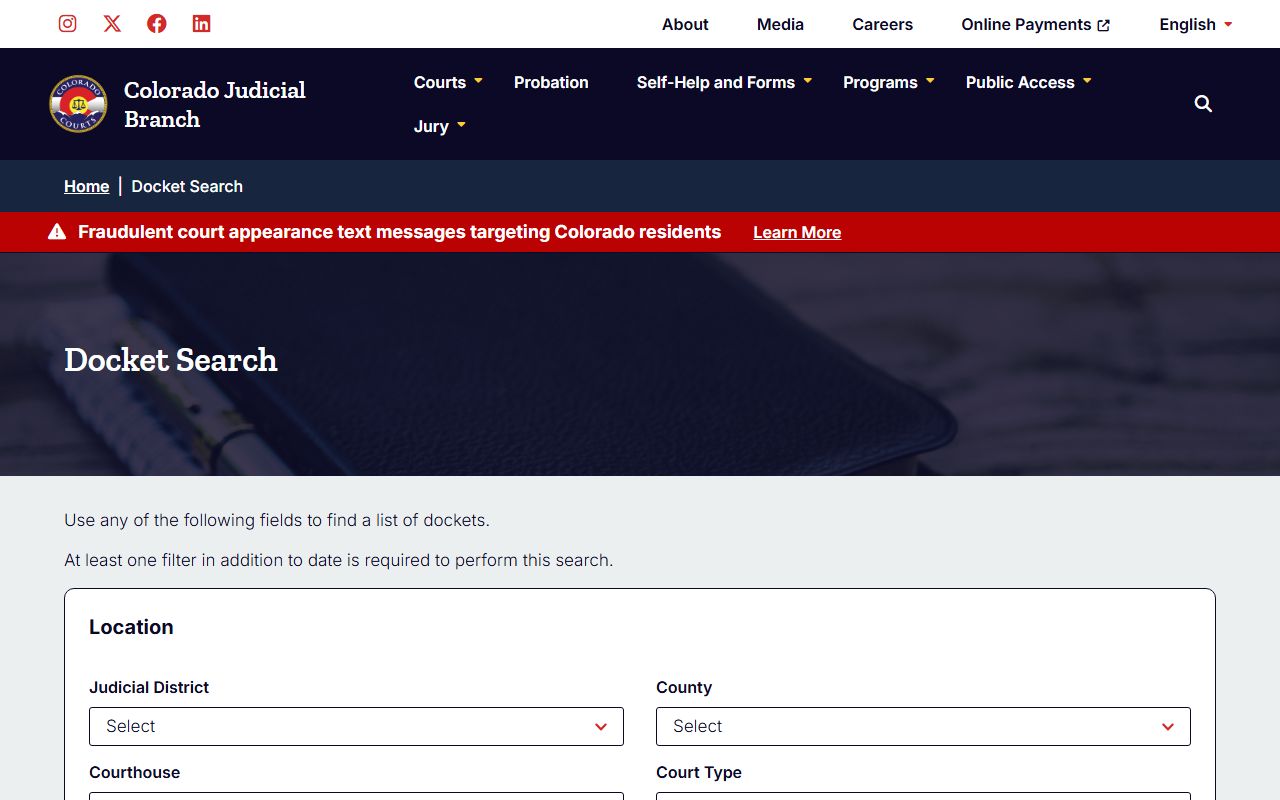
Use the docket result to identify the court, case number, party, and setting before asking the clerk for formal records.
| Search Field | How to Use It | Elbert County Note |
|---|---|---|
| Judicial District | Select a district when known. | Choose 23rd Judicial District for current Elbert County cases. |
| County | Limits the search to a county. | Choose Elbert County for local court records after arrest. |
| Courthouse | Filters by court location. | Elbert County Courthouse may appear as an option. |
| Court Type | Search county court, district court, or both. | Use both when the case level is not clear. |
| Date Range | Required with another filter. | Options include today, one week, one month, three months, six months, or a specific date. |
| Case Number | Enter year, class, and sequence when known. | Useful after the jail, court, or attorney gives a case number. |
| Party Name | Search by individual first and last name. | Use when no case number is available after a recent arrest. |
| Attorney Search | Search by attorney name or bar number. | Useful when counsel is known but party details are incomplete. |
Request Elbert Court Records
Official Elbert County court records after a jail arrest are requested from the court when the needed item is a court filing, order, docket entry, or disposition. The Colorado Judicial Branch record/document request form is the statewide online route for case documents. The Elbert Combined Court clerk can also help route document questions. The clerk phone is 303-621-2131, and the clerk email is ElbertClerk@judicial.state.co.us.
The court FAQ gives a filing window of 8:00 a.m. to 4:00 p.m., Monday through Friday, excluding holidays. Court mail goes to Elbert Combined Court, P.O. Box 232, Kiowa, CO 80117. Those contacts are for court records, not sheriff booking reports and not prosecution file requests. When a case is active and pending, a sheriff records request may be routed toward the District Attorney for discovery or prosecution records, depending on what is asked for.
The Colorado Judicial Branch access guide is the source for official document routes and court-record limits.
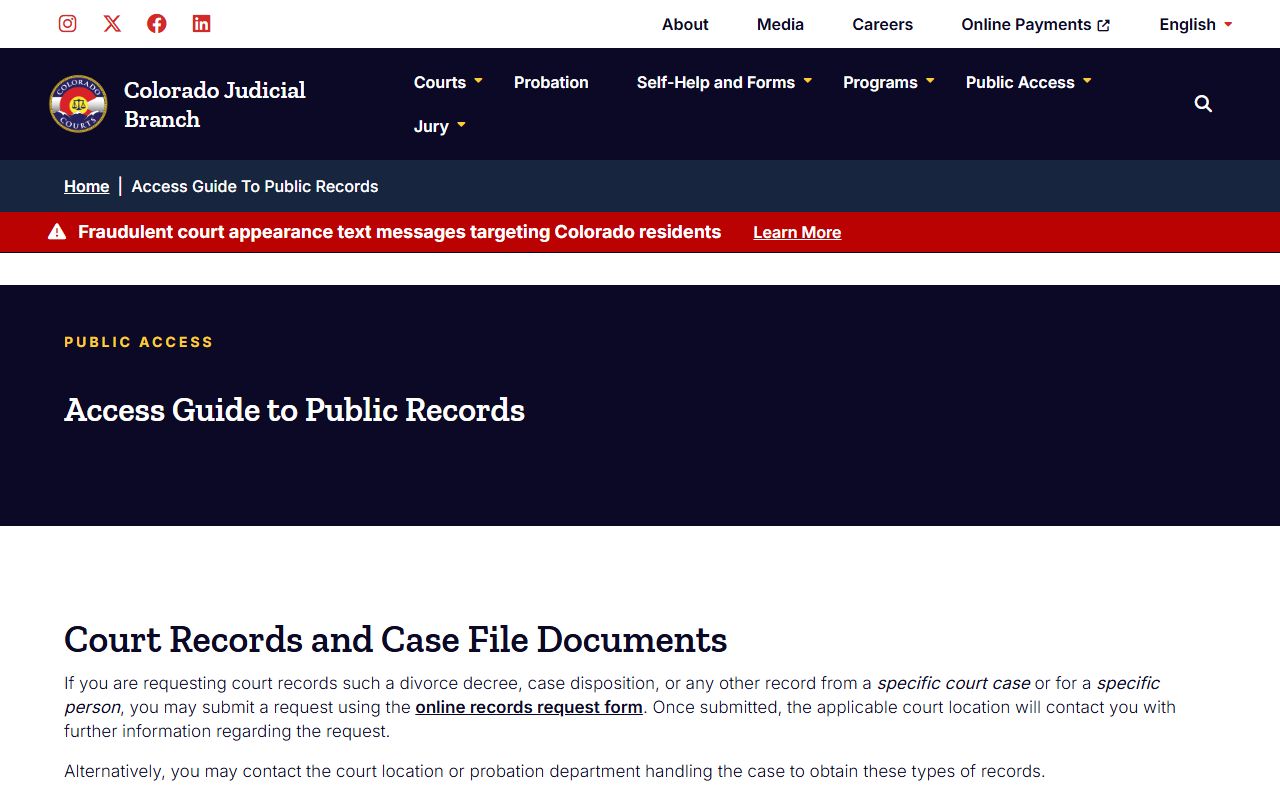
That distinction matters because a docket entry can point to a case, while a document request is needed for the filed paper itself.
Charging Documents After Arrest
A charging document is the paper that turns an arrest event into a filed criminal case. Police reports and jail booking entries may describe what an officer believed happened, but the District Attorney's charging decision controls the formal court record. In Elbert County, the 23rd Judicial District Attorney prosecutes state criminal-law violations in Douglas, Elbert, and Lincoln counties and uses prosecutorial discretion for adult and juvenile matters.
Three terms show up often in court records after a jail arrest: complaint, information, and indictment. The exact document depends on the case type and stage. A complaint can begin or support the early criminal case. An information is a prosecutor-filed charging document often used in felony cases. An indictment comes from a grand jury and is less common, but it can appear in serious or complex matters.
| Document | Filed By | What It Does | Common Use |
|---|---|---|---|
| Complaint | Officer or prosecutor | Starts or supports a criminal case at the early stage. | Early filings and many lower-level matters. |
| Information | Prosecutor | Lists the charges the prosecutor has chosen to file. | Many felony prosecutions. |
| Indictment | Grand jury | Accuses the defendant through a grand-jury charging process. | Serious or complex cases. |
Elbert Court Charge Status
Charge status can change after arrest. A jail booking may list suspected charges, a complaint may list initial counts, and later court records may show amended, reduced, dismissed, deferred, or resolved charges. That is why a court-record lookup should read each count separately. One charge may be dismissed while another remains pending, and an amended count may replace the wording first seen after booking.
The District Attorney's public records policy also affects what can be released before the case ends. The DA policy says criminal records under CCJRA have no fixed production deadline, and the office generally will not release records from a criminal case until the case is closed, except charging documents and arrest photos. Sealed, privileged, protected, or sensitive materials may be withheld or redacted.
| Status | Meaning in Court Records | Why It Matters |
|---|---|---|
| Pending | The charge is active and unresolved. | Hearings, bond conditions, and plea talks may still be ahead. |
| Amended | The charge was changed from the original filing. | The current court record may differ from the booking record. |
| Reduced | The charge was lowered to a lesser offense. | Potential penalties and case posture may change. |
| Dismissed | The charge was dropped or terminated. | A dismissal is not the same as a conviction. |
| Deferred | The outcome may be held open under court conditions. | Later compliance can affect the final disposition. |
| Disposition | The current or final legal outcome. | Use disposition language to separate accusations from results. |
Note: A court charge can be public before it is proven, so status language should be read with care.
Bond After Jail Arrest
Bond connects jail custody with the court record. For a new Elbert County arrest, call the jail at 303-621-2027 with the person's full name and date of birth to confirm current custody and ask what bond or court information can be released. The Elbert County Judicial Branch page lists bond hearings on Saturday at 2:00 p.m.; check the docket or court for the specific case because timing can depend on the arrest, court calendar, and hold status.
The county's Inmate Bonding page links to legal rights to post bond money, online posting instructions, jail bonding policies, and secure Inmate Canteen payment. A posted bond does not always mean immediate release. Another hold, detainer, warrant, sentence, parole matter, or federal or immigration issue can keep a person in custody even after one bond is satisfied.
- Cash bond
- Money posted directly to satisfy a bond amount set by the court.
- Surety bond
- A bond posted through a licensed surety or bail bond agent when allowed.
- PR bond
- A personal recognizance release based on a promise to appear, with or without conditions.
- No-bond hold
- A custody status where no releasable bond is available at that stage or on that matter.
- Detainer
- A hold from another agency or legal status that can block release.
Warrants Before Court Records
No official online Elbert County Sheriff active-warrant search was found in the research sources. A warrant-related arrest can still lead to booking at the Elbert County Jail and then to court records after arrest if a local case is filed or a court setting is created. An arrest warrant authorizes arrest on a criminal matter. A bench warrant is often issued by a judge after a failure to appear or a violation of a court order. A search warrant authorizes a search and is not the same as a current custody record.
For warrant-linked custody questions, use the verified local channels. Call the sheriff or jail information line at 303-621-2027. Use the Colorado docket search for public court settings and case information. Contact the Elbert Combined Court clerk at 303-621-2131 or ElbertClerk@judicial.state.co.us for court-record routing. For releasable sheriff criminal justice records, use the Elbert County criminal justice records request process. The sheriff tip line is 303-805-6111, and the tip email is crimetips@elbertcounty-co.gov.
Charges Versus Convictions
A charge is an accusation filed or pursued in court. A conviction is a finding or plea of guilt. Court records after a jail arrest can show both, but they should not be read as the same thing. The charge list may be public early in the case, while the conviction question depends on plea, trial, dismissal, deferred outcome, or another disposition.
| Point | Charge | Conviction |
|---|---|---|
| Case stage | Accusation after arrest and prosecutor review. | Final or current finding based on plea or verdict. |
| Proof level | Based on legal grounds to accuse and file. | Requires proof beyond a reasonable doubt or a guilty plea. |
| Public meaning | Shows what was alleged in court. | Shows an outcome, unless later changed or sealed. |
| Record reading | Check status for pending, amended, reduced, or dismissed counts. | Check disposition and sentence details if available. |
DA Records and Prosecution Files
Prosecution records are not the same as court records. Court filings and orders belong with the Judicial Branch. DA files can include prosecution materials, correspondence, evidence-related records, and internal items that may be restricted. The 23rd Judicial District Attorney records request page requires CORA and CCJRA requests through its online portal and says requests are not accepted by email or phone.
The DA policy says staff time beyond one hour, or two hours for victims, is billed at $41.37 per hour. Photocopies in excess of 25 pages are $0.25 per page, and storage media costs vary by size. Criminal case records under CCJRA have no fixed production deadline and can take weeks or months depending on the file and requested materials. The policy is not a Rule 16 discovery route, and pro se defendants are directed to a separate discovery process.
The 23rd Judicial District Attorney records page is the official portal route for prosecution-file requests tied to Elbert County court records after an arrest.
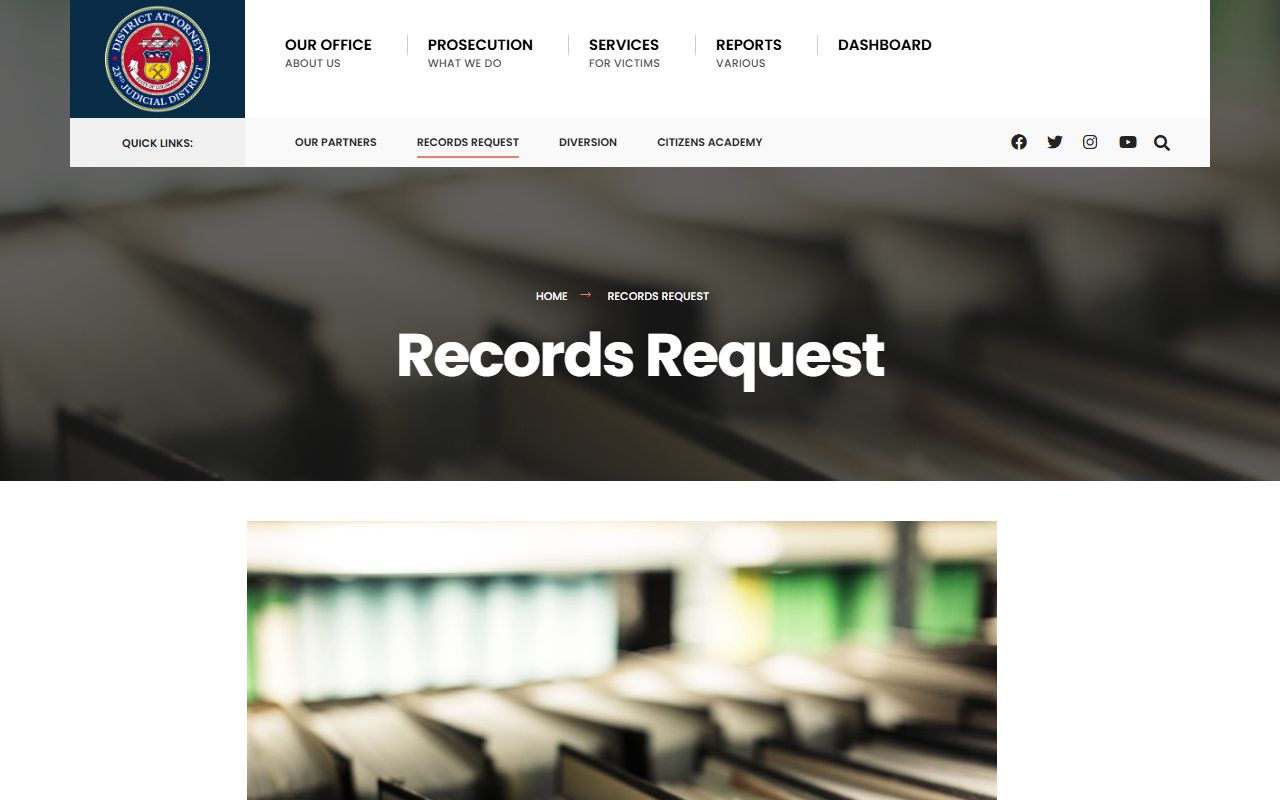
Use that portal only when the District Attorney is the custodian of the record, not for routine court copies held by the clerk.
Court Records Access After Arrest
Colorado public-record rules separate official action, criminal justice records, court records, and records that may be withheld. The Colorado Attorney General describes official action records as including arrest, indictment, charging by information, disposition, custody release, probation or parole decisions, and correctional reclassification or relocation. Those records must generally be open for inspection, but that rule does not make every police report, evidence file, juvenile record, sealed record, or prosecution file public on demand.
Elbert County sheriff records requests are handled under Colorado criminal justice records law, while non-criminal public records may fall under CORA. The DA policy cites CCJRA for criminal case records and uses the statewide $41.37 hourly rate for staff time beyond the free time allowed by its policy. The sheriff records process is separate and may use different local fees. Keep the custodian straight: jail and incident records go to the sheriff, court documents go to the clerk or Judicial Branch form, and prosecution records go to the DA portal.
Important: Elbert County court records after an arrest are not a consumer report and cannot be used for FCRA-covered employment, housing, credit, or insurance screening.
Sealed Versus Expunged Records
Colorado sealing rules can affect public access to court records after arrest. The Colorado Judicial Branch sealing page explains that sealed records are hidden from public view but still exist. The Colorado Bureau of Investigation sealing guidance points requesters to C.R.S. 24-72-703 for arrest and criminal record sealing. Eligibility depends on the case type, outcome, timing, and court order.
Expungement is narrower and is often used for records that the law treats differently from adult criminal case sealing. Do not assume a dismissal makes every arrest record vanish from every system. Court files, sheriff booking records, prosecution records, CBI records, and commercial copies may each require different steps or may have different limits. A court order is the key document for changing public access.
| Point | Sealed | Expunged |
|---|---|---|
| Public view | Hidden from public access once ordered. | Removed or treated as unavailable under the specific law that applies. |
| Record existence | The record still exists, with limited access. | The legal effect can be stronger but depends on the record type. |
| Common route | Petition or statutory process through the court. | Specific statutory process, often narrower than sealing. |
| Best proof | Court sealing order. | Court expungement order or statutory notice. |
Note: Sealing and expungement questions are legal questions, so the court self-help material should be read with the statute and any current forms.